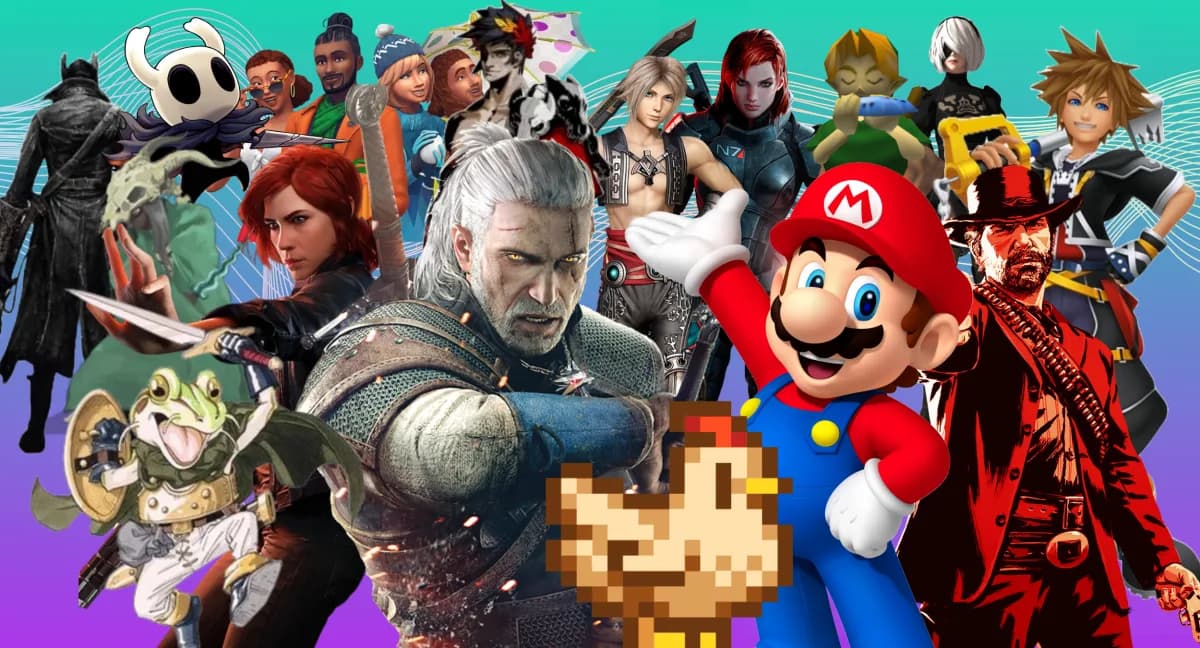
Every gaming site eventually has to do it. The list. The one that makes people angry in the comments, that gets screenshotted and dunked on, that someone somewhere will call "the worst take I've ever seen." We know. We've been there reading those lists too.
But here at MedGarGaming, we decided we wanted in on the chaos — and we wanted to do it honestly. This isn't a list of games we felt obligated to include because they're historically significant. This is a list of games that hit different. Games that left a mark. Games that, when you think about them years later, still make something stir in your chest.
We argued about this list. We lost sleep over it. Some games barely made the cut. Others were painful cuts. That tension is the point. Here are the 25 best video games of all time, according to us — and we'll defend every single entry.
How We Made This List
No algorithm. No review score averages. No metacritic math. We asked ourselves one question for each game: does this belong among the greatest ever made? Influence mattered. Staying power mattered. The feeling of picking up a controller and losing four hours without noticing — that mattered most of all.
We skewed toward games that pushed the medium forward, but we didn't exclude anything purely because it wasn't "artistic" enough. A game can be a masterpiece of pure fun. A game can change what games are. Both count.
Table of Contents
#25 — #21
#25. Hollow Knight (Team Cherry, 2017)
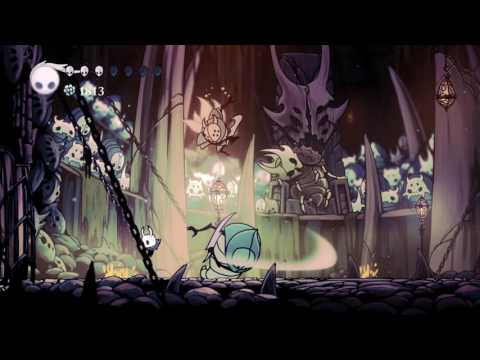
There are games you play and games you inhabit. Hollow Knight is the second kind. The underground kingdom of Hallownest — a fallen insect civilization draped in melancholy and silence — is one of the most fully realized game worlds ever built by a team of three people. Every corner holds a secret. Every enemy has a name and a purpose in the lore. The silence of the soundtrack, and the moments where Christopher Larkin's music swells without warning, will rearrange something in your brain permanently.
The combat is tight and demanding. The map is enormous. The optional boss fights — the Pantheons, the Radiance — are some of the hardest content ever designed. But Hollow Knight earns every moment of difficulty because it earns your investment first. You care about Hallownest. You care about what happened to it. That's rare.
#24. Hades (Supergiant Games, 2020)
Supergiant Games figured out how to solve the one problem rogue-likes always had: the emptiness between runs. Every time you die in Hades, something happens. Someone says something new. A relationship advances. The story moves. Failing is not losing time — it's earning story. That design insight alone would be enough to make Hades notable. But then you combine it with combat that feels better than almost any action game ever made, a cast of characters drawn from Greek mythology who are all somehow vivid and sympathetic, and an ending that is genuinely, surprisingly moving — and you have something special.
Hades is the rogue-like that made people who hate rogue-likes fall in love with rogue-likes. That's an achievement that deserves a top 25 spot all by itself.
#23. Red Dead Redemption 2 (Rockstar Games, 2018)
The word "cinematic" gets thrown around a lot in games. Red Dead Redemption 2 is what people are actually reaching for when they use that word and get it wrong. This is not a game that imitates movies. This is a game that does things movies cannot do — it makes you live with Arthur Morgan for 60 hours until his fate lands like a punch you saw coming from miles away and still weren't ready for.
The world Rockstar built for this game is obscene in its detail. The snow accumulates on your horse's flanks. NPCs remember conversations from hours ago. The economy of the gang feels real. RDR2 is the most committed act of world-building in the history of the medium, and Arthur Morgan's story is one of the greatest narratives gaming has ever told.
#22. Minecraft (Mojang Studios, 2011)
Here is the honest case for Minecraft being one of the greatest games ever made: it has sold over 300 million copies and it is still, in 2026, one of the most-played games on Earth. Kids who grew up with it are now adults making games influenced by it. It invented a genre. It became a cultural touchstone that transcends gaming entirely. And at its core, it is still just profoundly good — a sandbox that respects your imagination more than any other game ever has.
The survival mode loop of gathering, building, and descending deeper into the world is one of the most satisfying gameplay systems ever designed. Minecraft doesn't need stunning graphics or a complex narrative. It has something rarer: infinite potential.
#21. Sekiro: Shadows Die Twice (FromSoftware, 2019)
Of all the games FromSoftware has made, Sekiro is the one that demands the most from you — and gives the most back. Unlike Dark Souls, where you can outlevel a problem or change your build to find an edge, Sekiro is about pure skill. You learn the rhythm of each boss, internalize their patterns, and when you finally break through a fight that had you stuck for three hours, the euphoria is unlike anything else gaming can offer.
The posture system is a genuine design revolution. Fighting Genichiro for the first time is one of the defining moments in modern gaming. And the setting — a twisted version of Sengoku-era Japan — is exquisitely rendered and endlessly atmospheric. Sekiro is demanding. It is also extraordinary.
#20 — #16
#20. Mass Effect 2 (BioWare, 2010)
Mass Effect 2 pulls off something almost no game has ever matched: it makes you genuinely care whether your squad members survive. The Suicide Mission at the end of the game works as well as it does because BioWare spent the entire previous 30 hours making you fall for these people. Garrus. Tali. Thane. Mordin. You'd do anything to bring them home. That emotional investment is the result of extraordinary character writing combined with systems that actually make your choices matter.
Beyond the characters, Mass Effect 2 is simply a superb third-person shooter with excellent level design, a compelling mystery at its core, and a sense of scope that makes the galaxy feel enormous and intimate at the same time. It is the best argument ever made that games can be literature.
#19. Baldur's Gate 3 (Larian Studios, 2023)
Baldur's Gate 3 arrived and immediately broke every expectation of what a modern RPG could be. Larian gave players genuine agency — not the illusion of choice, but actual branching paths, reactivity, consequences that ripple across 100-hour playthroughs. You can solve almost any problem in almost any way. You can talk your way past encounters, fight through them, sneak around them, or set everything on fire and hope for the best.
The companions — Astarion, Shadowheart, Karlach, Gale — are among the best-written characters in gaming history. Every single one of them has a complete arc. Every single one of them surprised us. BG3 is a once-in-a-generation RPG that restored faith in the idea that games can still surprise you.

#18. The Last of Us (Naughty Dog, 2013)
Before The Last of Us, the conversation about games as emotional storytelling was theoretical. After it, it was settled. Joel and Ellie's journey across a post-apocalyptic America is one of the most carefully crafted narratives in any medium — a story about love and loss and the terrible things people do for the ones they care about. The ending remains one of the most discussed and debated moments in gaming history, and it deserves every word written about it.
The gameplay is tense, tactical, and constantly reinforcing the world's brutal logic. Every encounter feels dangerous because the game has convinced you that this world does not forgive mistakes. The Last of Us changed what people believed games could do. That's worth a top 20 spot forever.
#17. Dark Souls (FromSoftware, 2011)
Dark Souls invented an entire genre and a cultural archetype. The "Souls-like" is now a standard category of game design precisely because FromSoftware created something so influential that countless developers have spent the last 15 years trying to understand what made it work. The answer, we think, is that Dark Souls trusted players completely. It gave no tutorials. It explained nothing. It dropped you into Lordran and let you fail until you understood.
The world design — interconnected, layered, full of shortcuts and secrets that collapse the map into something surprising — remains unmatched. Killing the Bell Gargoyles for the first time. Ringing that first bell. The sound it makes. Every Souls player knows exactly what we mean.
#16. The Witcher 3: Wild Hunt (CD Projekt Red, 2015)
The Witcher 3 set the bar for what an open-world RPG can be, and 11 years later, most games are still trying to clear it. The key was CD Projekt Red's refusal to treat side quests as content to pad the game. Every quest in The Witcher 3 has a story. Every quest has characters worth remembering. "Bloody Baron" alone — a side questline — contains more genuine drama than most games manage in their entire runtime.
Geralt of Rivia is one of gaming's great protagonists: morally grey, world-weary, quietly heroic. The world he inhabits is enormous and feels genuinely lived-in. And the DLCs — Hearts of Stone and Blood and Wine — are some of the best add-on content ever made.
#15 — #11
#15. Super Mario 64 (Nintendo, 1996)
We know it's easy to call Super Mario 64 important and leave it at that. But importance doesn't get you this high on the list — quality does. And Super Mario 64 is still, in 2026, a joyful and brilliantly designed 3D platformer. The movement feels incredible. The worlds are bursting with ideas. The sense of exploration — finding a star you hadn't expected, uncovering a secret the game hid in plain sight — still delivers after thirty years.
This was the game that proved 3D could work. Not just technically — joyfully. Mario doesn't walk through 3D space. He cartwheels and triple-jumps and long-jumps through it. That energy defined an entire era.
#14. Elden Ring (FromSoftware, 2022)
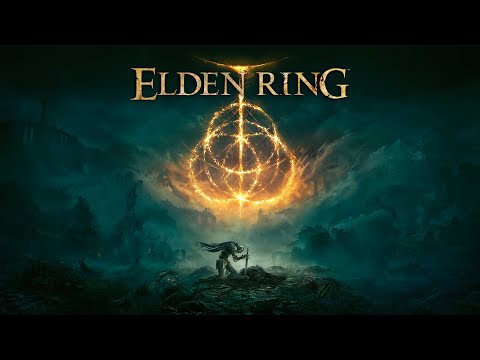
Elden Ring is FromSoftware's thesis statement. Everything they had learned across Dark Souls, Bloodborne, and Sekiro — the world design, the combat, the environmental storytelling, the cryptic lore — poured into an open world that rewards every act of curiosity. The Lands Between is a place of extraordinary beauty and violence, built with a density of secrets that still hasn't been fully catalogued four years after release.
What pushed Elden Ring above its predecessors for many players was the openness — the freedom to leave a boss that is destroying you and come back stronger, to stumble onto hidden areas that change your understanding of the world, to feel perpetually like the game has more to show you. It deserved every Game of the Year award it received.
#13. God of War (2018) (Santa Monica Studio, 2018)
The 2018 God of War did something genuinely difficult: it took a franchise defined by spectacle and button-mashing and made it introspective. Kratos, the rage-fuelled god-slayer of previous games, is now a father trying to hide his capacity for violence from a son who doesn't know what he really is. That tension — between the monster Kratos was and the man he's trying to be — drives one of the most moving stories in gaming.
The game is also technically extraordinary: one continuous shot, no cuts, for the entire 25-hour runtime. The combat with the Leviathan Axe has a tactile satisfaction that few games match. And the world of Norse mythology it builds is rich, dark, and endlessly compelling. The sequel, Ragnarök, expanded and deepened everything here — but the original is where the heart is.
#12. Half-Life 2 (Valve, 2004)
Half-Life 2 is still the standard-bearer for first-person storytelling. Gordon Freeman says nothing. He does everything. Valve's decision to tell the entire story of an occupied Earth through pure environmental design, NPC reactions, and impeccably paced gameplay sequences — without a single cutscene that takes control away from the player — was revolutionary in 2004 and remains remarkable today.
The gravity gun. Ravenholm. The beach buggy sequence on the coast. Highway 17. The Citadel. Half-Life 2 is structured as a parade of unforgettable set pieces, each of which introduced mechanics that games are still borrowing. No other FPS has ever been as coherent a vision, start to finish.
#11. Chrono Trigger (Square, 1995)
Every list like this includes Chrono Trigger, and the reason is simple: it is perfect. Not "perfect for its time." Perfect, full stop. The combat system — active ATB with dual and triple techs — is still thrilling. The time-travel narrative handles paradox and consequence with more intelligence than most science fiction novels. The characters, sketched in relatively few pixels, manage to be genuinely affecting. Frog. Magus. Robo. They live.
The multiple endings were radical in 1995. The New Game Plus was radical in 1995. Chrono Trigger treated players as partners in the experience, and that philosophy runs through every frame of it. Play it today and it still holds.
#10 — #6
#10. Super Metroid (Nintendo, 1994)
Super Metroid didn't invent the Metroidvania — that's a compound word for a reason — but it perfected one half of it. The sense of isolation Samus's silent journey through Zebes creates is almost unmatched in gaming. There is no dialogue. There is no hand-holding. There is just a world, layered and hostile and full of secrets, and a soundtrack that is among the most atmospheric ever composed for the medium.
Super Metroid taught players how to read environments. How to remember dead ends for later. How to notice when the world gives you a hint without saying a word. Every Metroidvania made since has been in conversation with it.
#9. Grand Theft Auto V (Rockstar Games, 2013)
GTA V is a satire of modern America so sharp that it remains painfully relevant thirteen years after release. The three-protagonist structure — Michael's midlife crisis, Franklin's hustle, Trevor's chaos — works better than any open-world narrative before or since. Switching between characters mid-mission, the camera pulling back to reveal three storylines intersecting in real time, still feels thrilling.
The open world of Los Santos is a staggering achievement in density and detail. And GTA Online — still one of the most-played games on the planet — extended the game's life in ways that no one could have predicted. GTA V is both a masterpiece of design and a cultural artifact. Its influence runs through everything.
#8. Bloodborne (FromSoftware, 2015)
Bloodborne is the most purely atmospheric game FromSoftware has ever made. The city of Yharnam — a Victorian Gothic nightmare of cobblestones, fog, and things that were people — is the greatest horror environment in gaming. The lore, pieced together through item descriptions and environmental details, is Lovecraftian in its scope and its willingness to leave questions unanswered. The more you understand it, the more unsettling it becomes.
The combat is faster and more aggressive than Dark Souls — you're rewarded for pressing forward, for hunting rather than surviving. It demands a different kind of courage. And the optional areas: the Nightmare of Mensis, the Fishing Hamlet, the Orphan of Kos — these are some of the most extraordinary pieces of game design ever committed to a disc.
#7. The Legend of Zelda: Breath of the Wild (Nintendo, 2017)
Breath of the Wild reset the conversation about what open worlds could be. In a landscape full of icon-cluttered maps and activity checklists, Nintendo gave players an enormous world and almost no instructions. Go anywhere. Do anything. Figure it out. The physics system — the way wind, fire, electricity, and water interact — created a playground for creativity that players are still finding new uses for years later.
Every climb reveals something new. Every discovery feels like yours. Breath of the Wild recaptured the feeling of the original Legend of Zelda — a world that seemed to contain more than you could ever fully map — and rebuilt it in three dimensions. It is the most purely joyful open-world game ever made.
#6. Metal Gear Solid 2: Sons of Liberty (Konami, 2001)
We know. We know. Hear us out.
Metal Gear Solid 2 was misunderstood on release because players wanted to play as Snake and got Raiden instead. What Kojima was actually doing — pulling the rug out from under player expectations to make a point about identity, control, information, and the nature of heroic narratives — only became clear with time. MGS2 is a game about simulations, about the media feeding you what it wants you to see, about whether individual agency is even possible in an age of manufactured reality.
It came out in 2001 and predicted the next two decades. The gameplay is brilliant. The codec calls run 45 minutes. It is genuinely one of the most ambitious artistic statements the medium has ever produced, and it deserves to be recognized as such.
#5 — #1
#5. The Legend of Zelda: Ocarina of Time (Nintendo, 1998)
Some games are important. Ocarina of Time is foundational. The 3D action-adventure grammar that almost every game since has used — camera lock-on, context-sensitive actions, the day-night cycle as a game mechanic, the idea of a "dungeon" as a self-contained puzzle space — was codified here. Before Ocarina, 3D games were still figuring out the basics. After Ocarina, they had a blueprint.
But Ocarina isn't only historically important. It is still a genuinely moving experience. Link's journey from a child in Kokiri Forest to the Hero of Time, and the cost that journey carries, is elegantly told through the most economical of means. The Temple of Time. The Sacred Realm. The sadness in Zelda's eyes when she sees what her hope has cost. Ocarina of Time makes you feel the weight of time, and that's an extraordinary thing for a game to do.

#4. Red Dead Redemption (Rockstar San Diego, 2010)
The first Red Dead Redemption is the more emotionally economical of the two. Where RDR2 is an epic, RDR1 is a tragedy — lean, focused, and devastating in its final act. John Marston's story is one of the great Westerns in any medium: a man trying to leave violence behind, dragged back by a system that has no interest in letting him go.
The open world of the American Southwest and Mexico is still one of the most beautiful environments in gaming — wide, dusty, lonely in the way that real wilderness is lonely. And the ending, which we will not spoil here, is a gut-punch that every person who played it remembers exactly where they were when it happened.
#3. Super Mario Bros. 3 (Nintendo, 1988)
What do you say about Super Mario Bros. 3 that hasn't been said? It arrived in North America in 1990 as a cultural event — children saving up money for months, playground debates about what was real and what was rumor. What it delivered was a 2D platformer of such generosity and invention that it still defines the genre. Every world in SMB3 introduces a new concept. Every level challenges you in a new way. The game never stops giving.
The Tanooki Suit. Bowser's airships. World 8. Super Mario Bros. 3 understood that variety and momentum are the twin engines of great game design, and it never let either one stall. Thirty-eight years later, it still doesn't.
#2. Tetris (Alexey Pajitnov, 1984)
Tetris is the only game on this list that has genuinely no competition in its particular niche: it is the most perfectly designed game ever made. Every mechanic serves the core experience. Every addition over the years — T-spins, holds, modern guideline rules — has refined rather than diluted it. There is no excess. There is no bloat. There is only the falling of pieces and the satisfaction of a clean line clear.
More than four billion people have played Tetris. It exists on every platform. It has outlasted empires. It was the first software ever sold in the Soviet Union. Pajitnov designed a perfect machine, and the machine has been running for forty years without needing repair. There is no higher achievement in game design.
#1. The Legend of Zelda: The Wind Waker (Nintendo, 2002)
We know what you're thinking. The Wind Waker? Over Ocarina? Over Breath of the Wild?
Yes.
Here is why: no game has ever made us feel the way Wind Waker makes us feel. The cel-shaded art — controversial in 2002, timeless now — gives the world a warmth and expressiveness that no realistic renderer has ever matched. Sailing across the Great Sea, with the wind at your back and a world of islands waiting to be discovered, produces a specific kind of joy that is impossible to describe and unforgettable once felt. Link's enormous eyes communicate more emotion than most games achieve with full voice acting.
Wind Waker is a game about a boy trying to save his sister. It is also somehow a game about the end of an age, the passing of one world and the hopeful, bittersweet beginning of another. The final confrontation with Ganondorf is the most moving boss fight ever designed — not because of its difficulty, but because of what it means. When the King of Hyrule makes his wish and the ocean rises, something in us rises with it. And then it falls.
Wind Waker is our #1 because no other game has come as close to making us feel what the best art makes you feel: that the world contains more beauty and sadness than you could ever fully see — and that it's worth looking anyway.
Honorable Mentions
These games broke our hearts by not making the final cut. They all deserved to be here:
- Shadow of the Colossus — the most elegiac game ever made
- Portal 2 — the funniest and most cleverly designed puzzle game ever built
- Final Fantasy VI — the greatest story the series ever told
- Planescape: Torment — proof that words can be the primary mechanic
- Resident Evil 4 — the template for modern action game design
- Disco Elysium — the most original RPG of the last two decades
- Celeste — the best platformer and the most honest game about mental health ever made
- Undertale — a game that knew exactly what it was doing with every single pixel
- Devil May Cry 3 — the apex of stylish action gaming
- Persona 4 Golden — the warmest game ever made
Disagree violently with our list? Tell us in the comments or head to our Forum — we want the argument. That's the whole point.
Comments (0)
Join the conversation
No comments yet. Be the first!